Overview
A hospital runs on a sequence: the patient pays, a nurse takes vitals, then a doctor consults. That sequence is usually held together by paper and hallway conversations. We built a facility application and a national dashboard where the sequence lives in the software: every role sees the same visit, at the stage it has actually reached.
- Client
- West African ministry of health
- Industry
- Public health
The challenge
- Doctor, nurse, lab, imaging, pharmacist, cashier, billing, store keeper, accountant, facility admin, super admin: eleven roles need different views of one patient visit without duplicating the record.
- Clinical work is payment-gated. Nursing and medication steps must stay locked until the cashier clears payment, and the software has to enforce that rather than trust it.
- Departments are licensed centrally: a facility cannot switch on Laboratory or Maternity, or assign staff to them, until the national level grants the licence.
- Inventory crosses departments, so a pharmacist dispensing drugs and a store keeper running the warehouse cannot share one unguarded catalogue.
Approach
- 01
Model the visit, not the screens
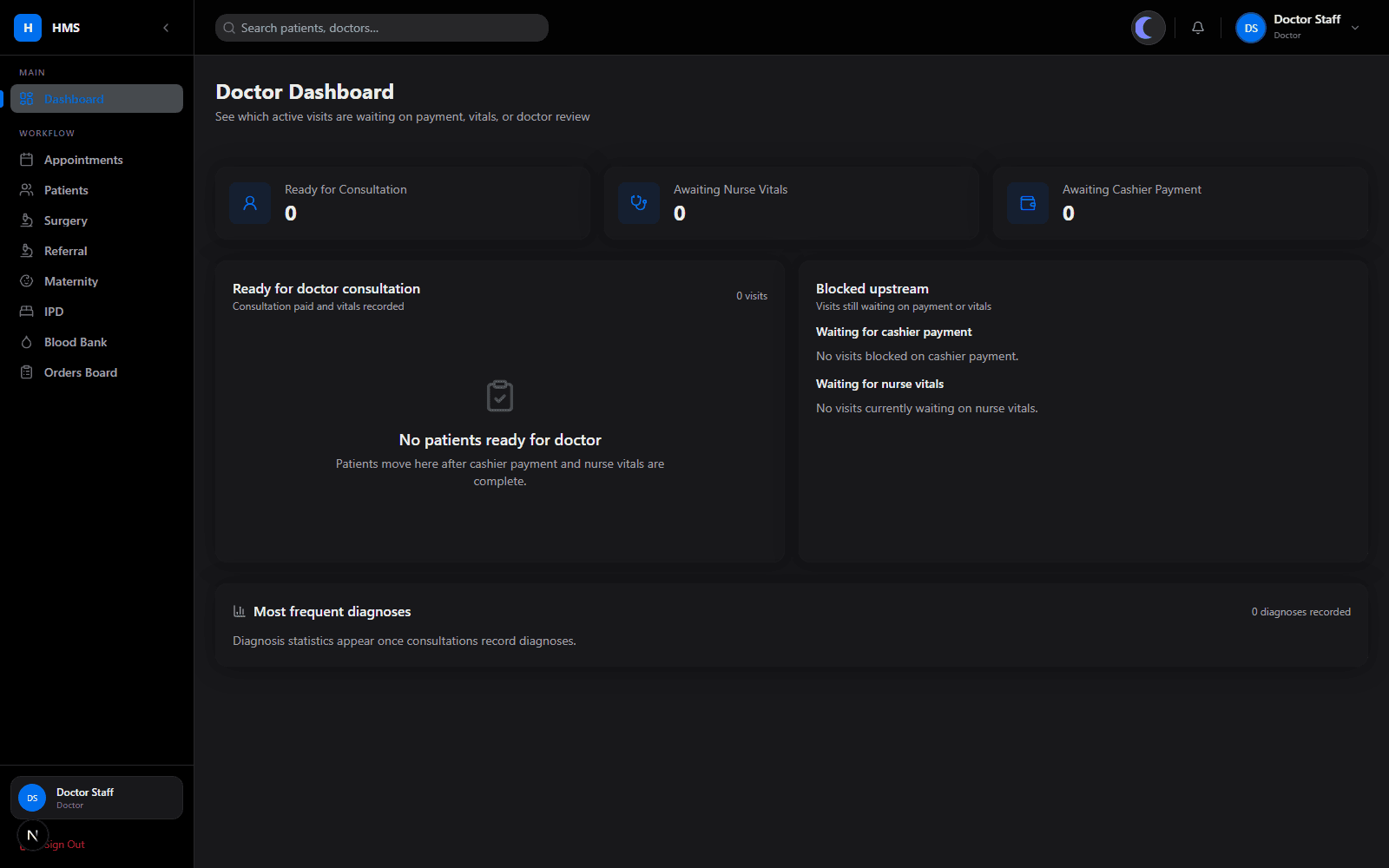
Every role dashboard reads one visit pipeline of ready for consultation, awaiting nurse vitals and awaiting cashier payment, so the doctor's queue and the nurse's queue are two views of the same state, and 'blocked upstream' is a first-class thing the UI can show.
- 02
One shell, eleven workspaces
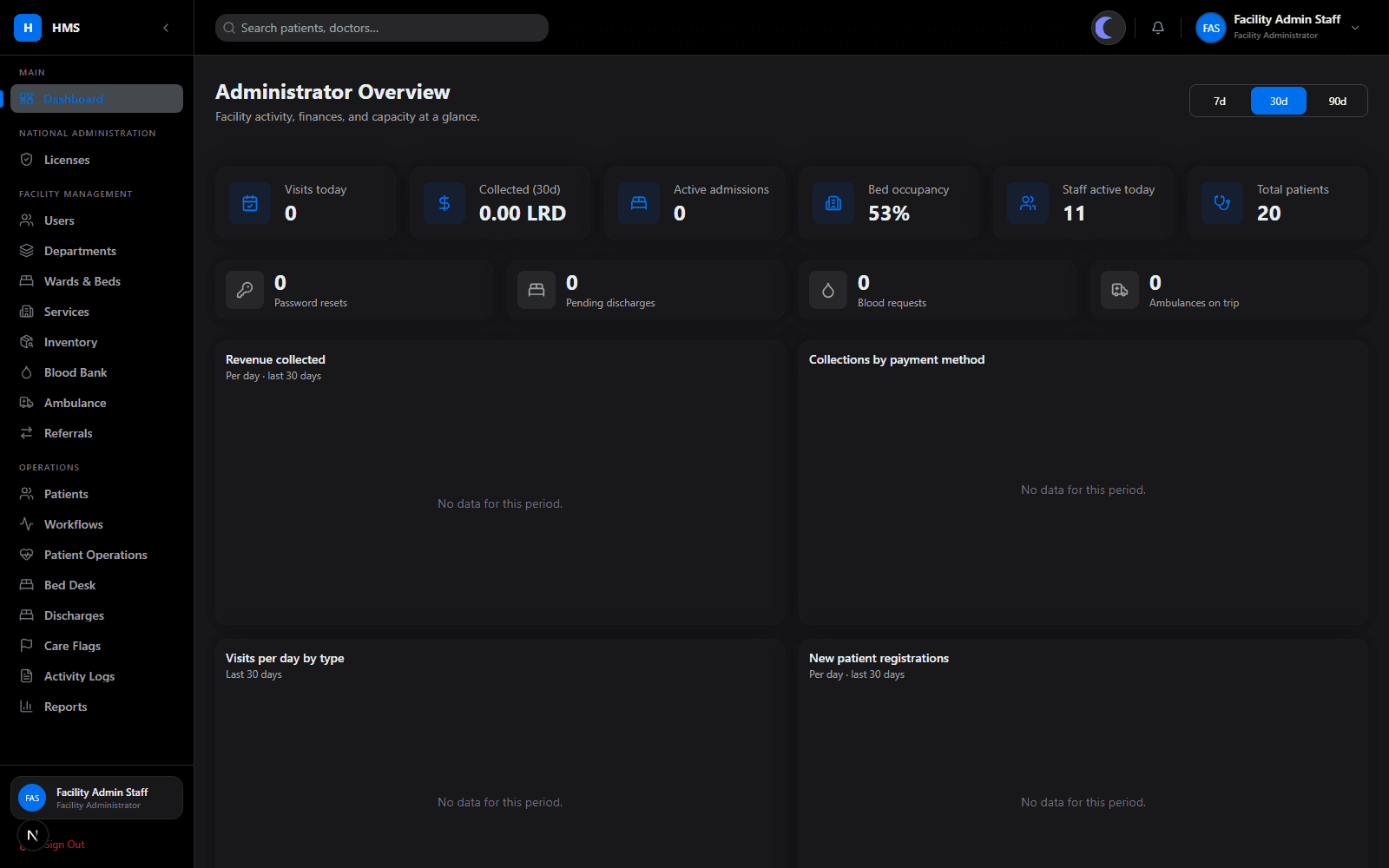
A shared application shell of sidebar, global patient search, theme and account menu, with role-scoped navigation and permissions. Adding a role means adding its links and its slice of the data, not another application.
- 03
Licensing as a national control plane
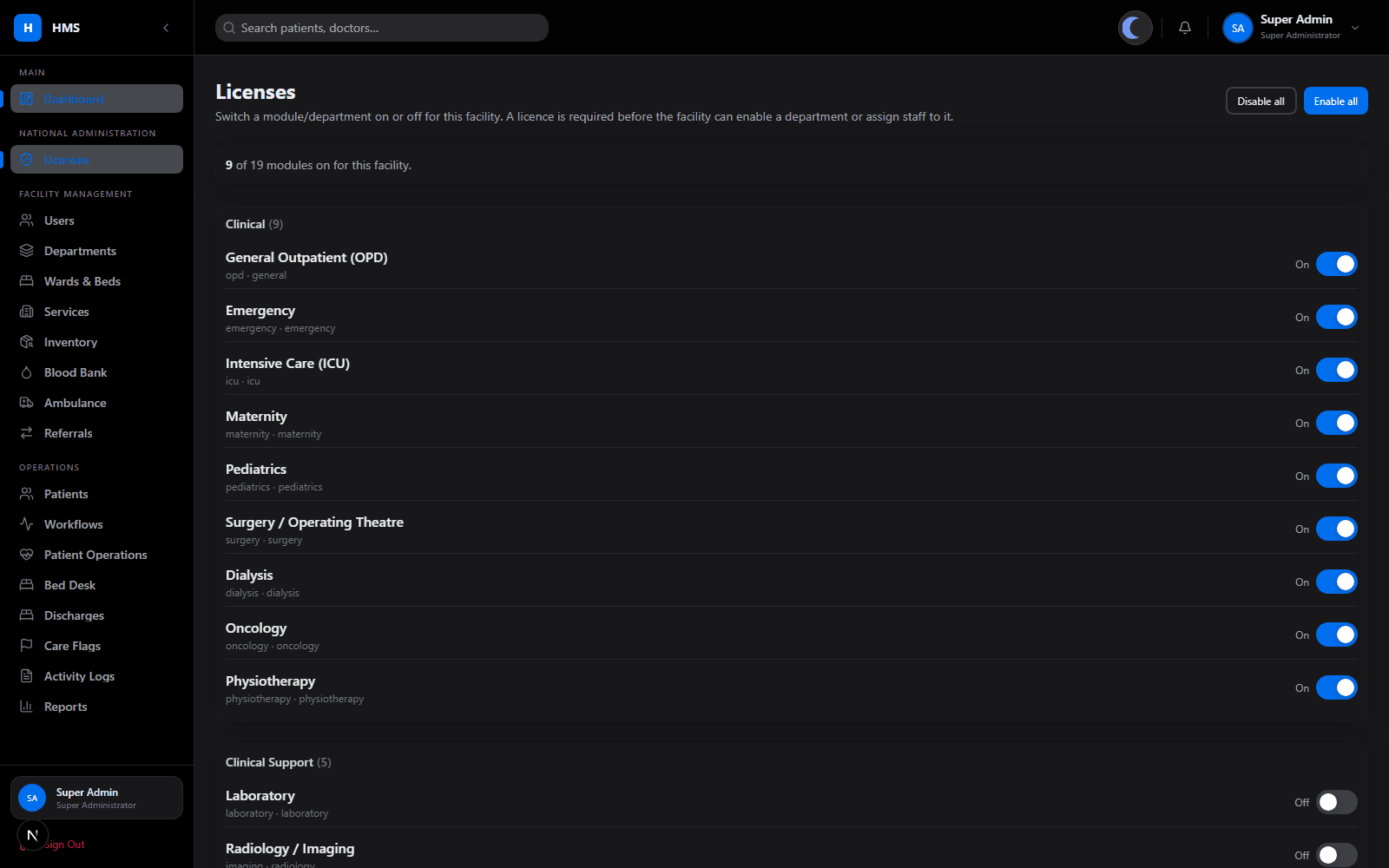
A super-admin console toggles 19 modules per facility across clinical and clinical-support categories. A facility can only enable a department, or assign staff to it, once the licence is on.
- 04
Separation of duties in the supply chain
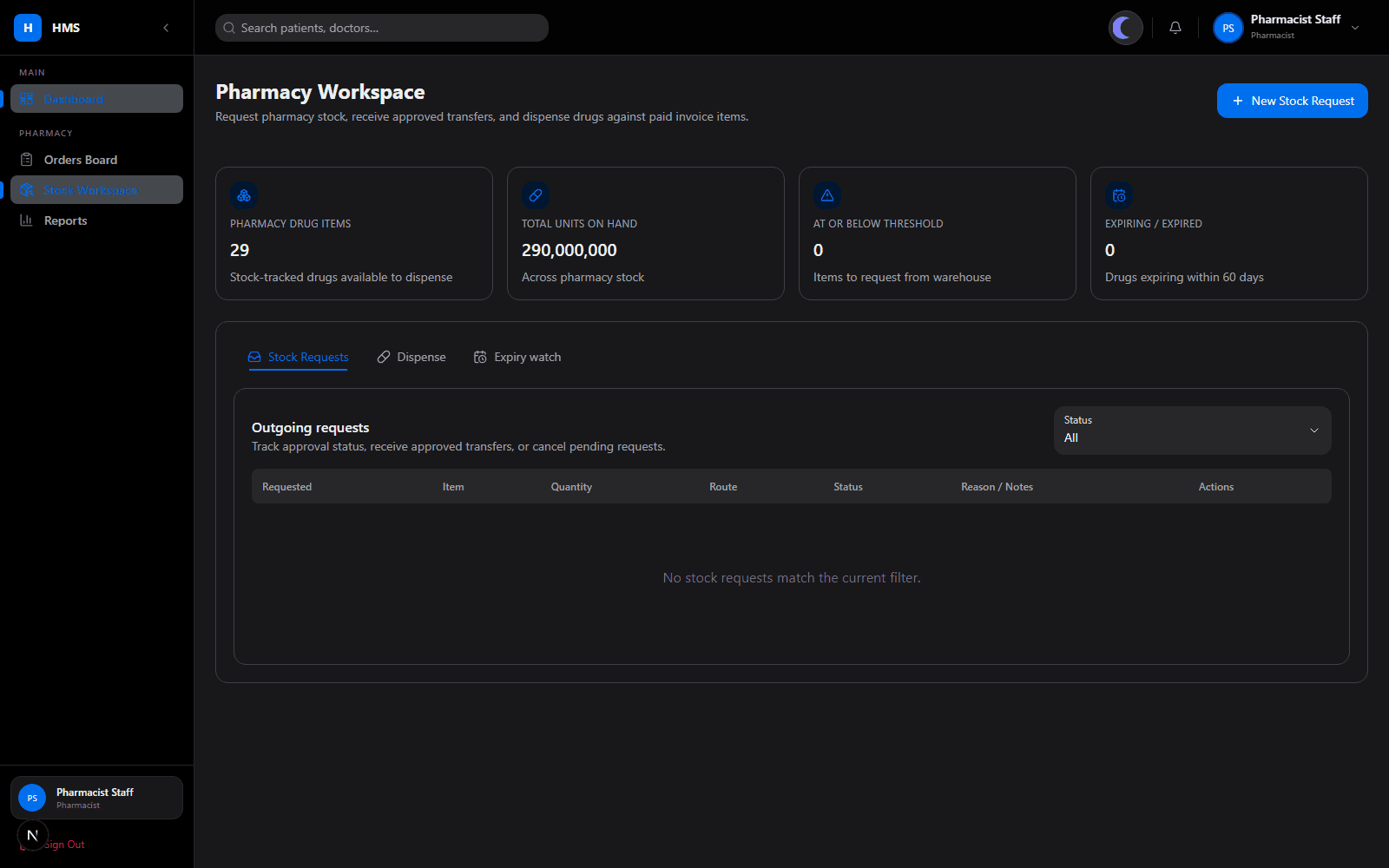
Pharmacists request stock from the warehouse and receive approved transfers rather than editing the catalogue; the store keeper's view is read-only on the catalogue itself, which facility admin owns. Dispensing is tied to paid invoice items.
What shipped
11
role-based workspaces, from doctor to store keeper
19
licensable modules controlled nationally
2
applications: facility app and national dashboard
Payment-gated
clinical workflow enforced end to end
Stack
- Next.js 16
- React 19
- NestJS 11
- TypeScript
- Drizzle ORM
- PostgreSQL
- Redis
- BullMQ
- Socket.IO
More work
E-learning · Live Sessions · Payments
Curriculum Learning Platform
A West African curriculum platform for WASSCE, BECE and IGCSE, where students learn, tutors teach live, and guardians pay for and watch progress across five roles.
Marketing Site · CMS · SEO
Embroidery & Branding Site
A search-first website for a twelve-year-old Ghanaian embroidery and apparel branding business, with the whole catalogue editable by the people who run it.
Mobile Apps · Marketplace · Payments
Executive Mobility Platform
A luxury chauffeur marketplace booked by the hour or the day, with customer and chauffeur apps, admin console, wallet and live tracking, built as one platform.
E-commerce · Product Customiser
Customisable Commerce Platform
A Ghana-first storefront where customers personalise a product and preview it live, plus the locked plan that takes it to mobile-money payments and launch-safe auth.
Web Platform · Community · Realtime
Pan-African Engineering Network
A questions-and-answers and mentorship platform for consulting engineers across Africa, shipped in four languages including right-to-left Arabic.
Landing Site · Email
Engineering Network: Waitlist Launch
A standalone coming-soon site that held the brand and collected the waitlist months before the platform was ready to launch.