Overview
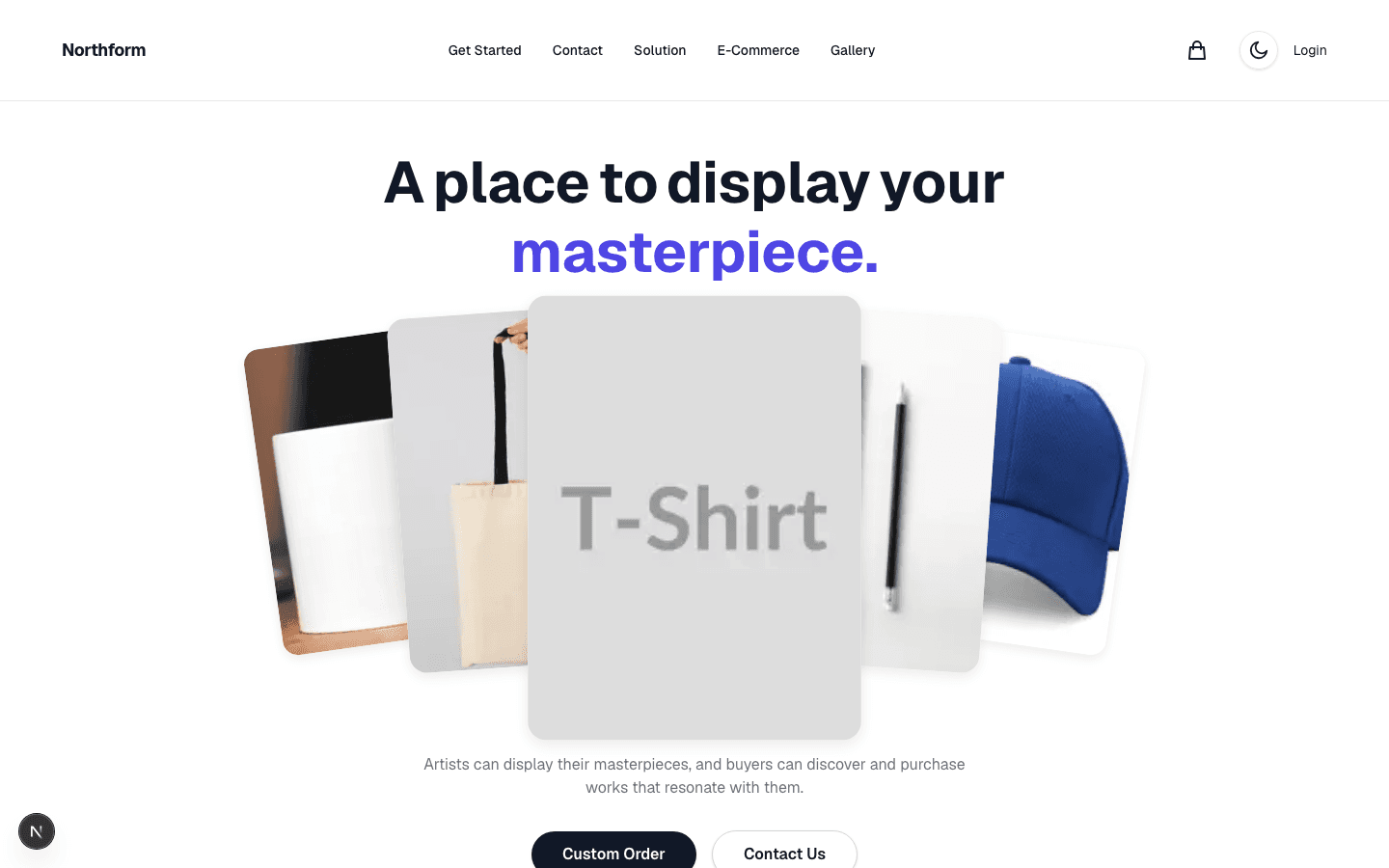
A working storefront where customers personalise a product and see it before they buy, and alongside it the audit that found what stood between this and taking real money. The customiser, catalogue and cart run today; the payments and authentication work is specified decision by decision, ready to build.
- Client
- Branded merchandise retailer, Ghana
- Industry
- Retail & e-commerce
The challenge
- Customers needed to see their own text and artwork on the product before ordering; a picture of a blank t-shirt sells nothing.
- Checkout existed in the frontend but never charged, so the shop could not complete a sale.
- Mobile money is how Ghana pays. Card is secondary, so leading with card in the UI would mean leading with the minority rail.
- A security review found no email verification, no password reset, no MFA, no session revocation, and an admin account hard-coded in the repository.
Approach
- 01
Build the customiser first
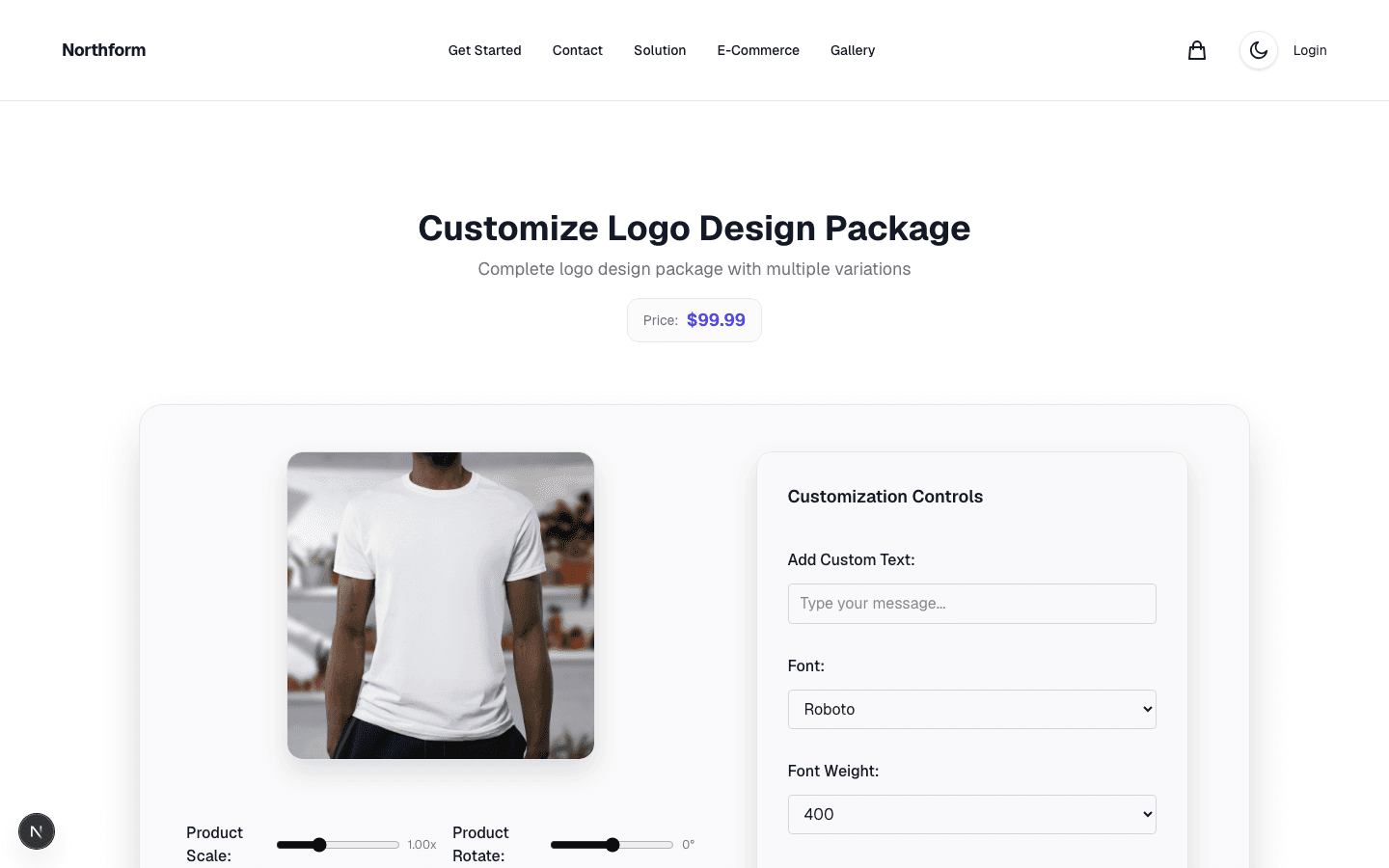
The product page is a live preview: type your text, pick the font and weight, scale and rotate the artwork on the garment, then add the configured item to the cart. It is the part of the shop that does the selling, so it shipped first.
- 02
Fail to boot rather than run insecure
The API refuses to start when required secrets are missing, naming each one. An environment without signing keys can no longer come up quietly and issue tokens; the failure is loud, at boot, in every environment.
- 03
Decide the payment rails before writing them
A locked decision log fixes Paystack with mobile money as the primary path, card second, GHS only, money stored as bigint minor units, guest checkout with an account claimable later by email, and the failure modes to design for: 3G dropping mid-payment, a double-tapped pay button, a webhook arriving before the redirect. Providers sit behind one interface so a second gateway is an implementation, not a rewrite.
- 04
Plan the data move once
Managed Supabase Postgres alongside the object storage already in use, giving one vendor, one bill, daily backups and point-in-time recovery, with the schema drafted as migrations: uuid keys, timestamptz throughout, integer money, and line-item snapshots so order history survives catalogue edits.
What shipped
Live
product customiser: text, font, scale and rotation on the garment
Boot-time
hard-fail on missing secrets, in every environment
2
locked PRDs for payments and auth hardening, ready to build
Next
Paystack mobile money, Postgres cutover, TOTP for admins
Stack
- Next.js 15
- React 19
- Express
- TypeScript
- Sequelize
- PostgreSQL (planned)
- Paystack (planned)
- Railway
More work
E-learning · Live Sessions · Payments
Curriculum Learning Platform
A West African curriculum platform for WASSCE, BECE and IGCSE, where students learn, tutors teach live, and guardians pay for and watch progress across five roles.
Marketing Site · CMS · SEO
Embroidery & Branding Site
A search-first website for a twelve-year-old Ghanaian embroidery and apparel branding business, with the whole catalogue editable by the people who run it.
Web Platform · Health · Cloud
National Health Management System
A hospital management platform where eleven staff roles work one shared patient visit, and a national console licenses each facility's departments.
Mobile Apps · Marketplace · Payments
Executive Mobility Platform
A luxury chauffeur marketplace booked by the hour or the day, with customer and chauffeur apps, admin console, wallet and live tracking, built as one platform.
Web Platform · Community · Realtime
Pan-African Engineering Network
A questions-and-answers and mentorship platform for consulting engineers across Africa, shipped in four languages including right-to-left Arabic.
Landing Site · Email
Engineering Network: Waitlist Launch
A standalone coming-soon site that held the brand and collected the waitlist months before the platform was ready to launch.